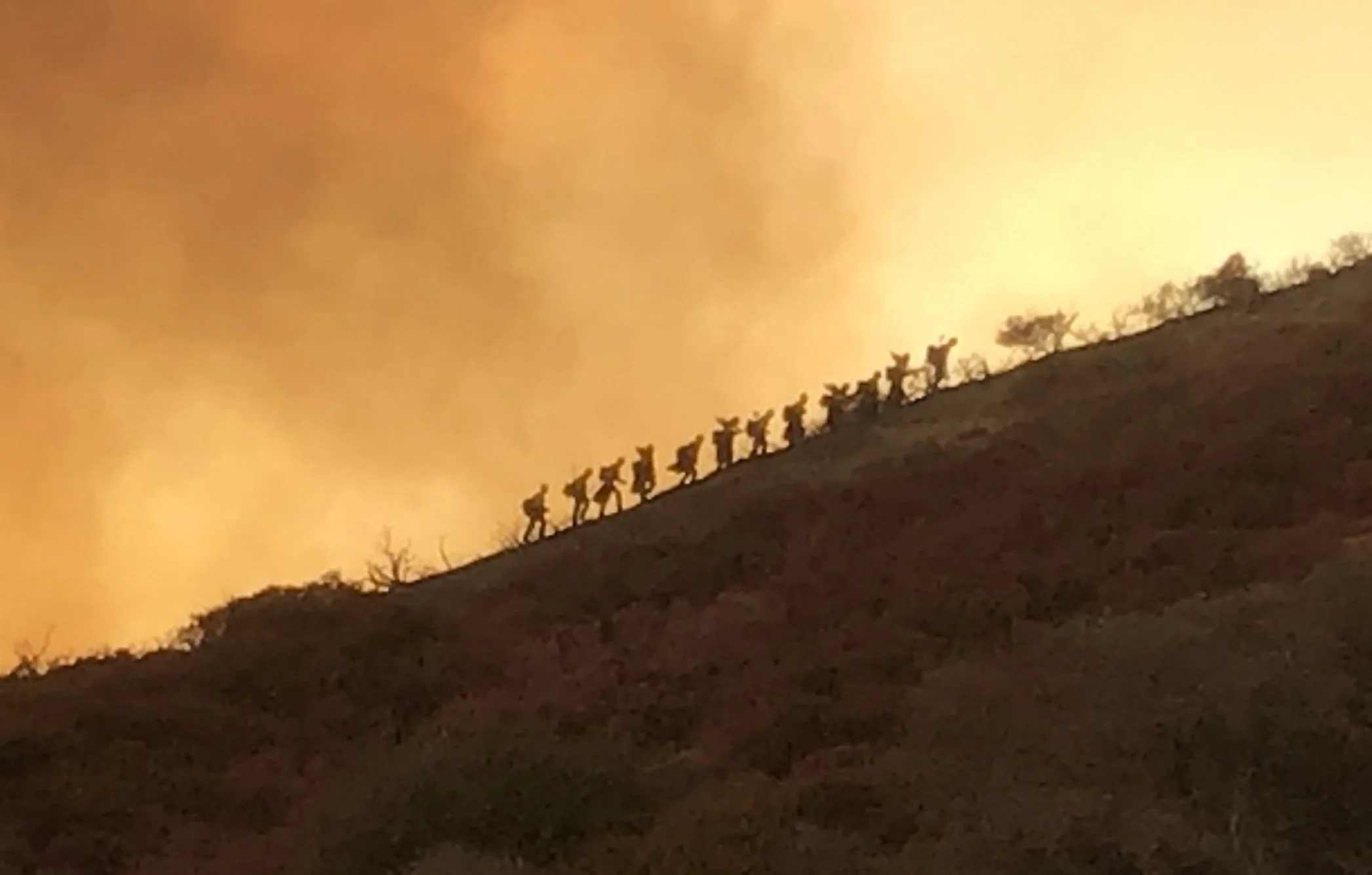
Wildland firefighting is not just a job. it’s a profession built on discipline, teamwork, and performance under pressure.
If you’re willing to work hard, learn fast, and operate in challenging environments, this path is open to you.
This page outlines:
What the job involves
Minimum requirements
Required training
How to get hired
Start Here
-
Train Hard
-
Earn Your Place on the Line
-
Start Here - Train Hard - Earn Your Place on the Line -
Training, requirements, and next steps
-
How to get started
Step 1:
Complete required entry-level training
Step 2:
Apply with an agency or fire organization (Some employers will support your training after hiring while others require classroom training to already be completed).
Step 3:
Pass the Pack Test
Step 4:
Gain experience through assignments and on-the-job training
-
Required Training (FFT2)
S-130 – Firefighter Training
S-190 – Introduction to Wildland Fire Behavior
L-180 – Human Factors in the Wildland Fire Service
ICS-100 & IS-700 – Incident Command System (ICS)
These courses provide the foundation for safe and effective fireline operations. Completing these courses are required to earn Firefighter Type 2 qual.
-
Minimum Requirements
Be at least 18 years old
Have a valid driver’s license
Be in good physical condition
Be able to pass the Work Capacity Test (Pack Test)
Be willing to work in adverse and rapidly changing environments
-
Physical Fitness Standards
3 miles
45-pound pack
Under 45 minutes
You should also be prepared for:
Hiking steep terrain
Carrying tools and equipment
Sustained physical effort over long operational periods
-
Core responsibilities include
Constructing fireline using hand tools and equipment
Operating pumps, engines, and firing devices
Conducting mop-up and securing fire perimeter
Working long hours in steep, rugged terrain
Following direction within an organized incident command structure
-
What to expect
12–16+ hour shifts
Extended assignments (often 14 days)
Exposure to heat, smoke, and physically demanding conditions
High accountability - Your performance affects crew safety
-
Where you can work
Local fire departments and districts
State agencies (including departments of forestry and fire management)
Federal agencies
Contract crews and private vendors
-
Why you should train with us
We provide hands-on, operationally focused training designed to prepare you for real-world conditions.
Experienced instructors with active fireline backgrounds
Scenario-based, field-driven instruction
Emphasis on safety, performance, and decision-making
Training aligned with national standards
Network with students and instructors from across the country
-
Documentation
Keep copies of every certificate, taskbook, and eval your earn. Track all fire assignments. You must be able to provides copies to all future employers.
Documents should be kept in a safe place and it’s recommend to keep a backup in cloud storage system such as OneDrive or Google Drive.
Maintain a Responder Update Sheet
Retain copies of every assignment Resource Order (RO) regardless of being on a hand crew, engine or working as a single resource.
Request updated Master Record at the end of each season to support work history.
-
Work Capacity Test (aka pack test)
A federal employee may only participate in a WCT that follows federal guidance within the Interagency Standards for Fire and Aviation Operations (Red Book).
• Department of Interior: DOI employees should refer to their specific agency chapters in the Red Book for guidance on participating in a WCT.
• US Forest Service: A FS employee may not take a WCT administered by a non-federal partner.
Non-agency firefighters will be certified by State or local fire departments, or private training providers approved by a memorandum of understanding (MOU) through their local GACC. Agencies will not assist in the administration or sponsor the work capacity test (WCT) as the certifying agency.
Resources
-
NWCG
Training Requirements and more info on starting out as a Firefighter Type 2 (FFT2)
-
Jobs
Visit USAJobs for employment with federal agencies. Looking to work for State Government or private contractors? Apply directly through their website.
-
Training Catalog
All NWCG training is listed on the Wildland Fire Learning Portal. Create a login or view the catalog as a guest.
-
FEMA
Mix of in-person and online courses required for qualifications